Last Updated on 2 December, 2025 soccerscoop
What Does Tyrell Malacia Behavior Tell Us About Man Utd Future under Amorim?
Introduction: A Defining Moment for Malacia
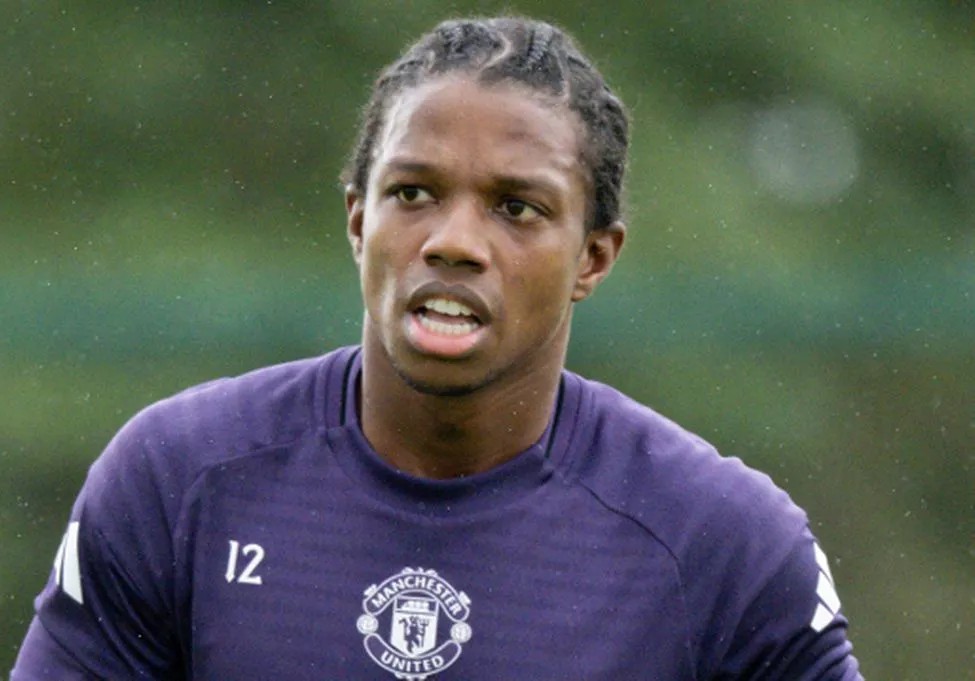
When Ruben Amorim arrived in Manchester United, every player knew that the stakes had changed. The Portuguese manager brought him a reputation for tactical discipline and a clear vision of how his teams should operate. For Tyrell Malacia, the Dutch left-back, who has endured a challenging period at Old Trafford, Amorim arrival represented both an opportunity and a test.
Recent decisions the new manager regarding Malacia role have sparked intense scrutiny, not just of the tactical choices themselves but of how the player has responded. Malacia’s reaction to being sidelined or repositioned within Amorim’s system offers crucial insights into his character, his future at the club, and what it means for Manchester United evolving squad dynamics.
The Context: Malacia Turbulent Journey
Tyrell Malacia arrived in Manchester United in the summer of 2022 with promise and potential. The former Feyenoord defender was seen as a modern full back, capable of contributing both defensively and in attack. However, his time in Old Trafford has been marred inconsistency and, more significantly, injury problems that have limited his impact.
Long spells on the sidelines have prevented him from establishing himself as the undisputed first-choice left-back, with competition from Luke Shaw and later Diogo Dalot further complicating his pathway to regular minutes.
When Amorim took charge, Malacia found himself at a crossroads. The new manager’s preference for the back three system and his specific demands from wing-backs meant that every defender needed to prove their worth anew. For Malacia, this represented both a challenge and opportunity to reinvent himself under fresh leadership.
Amorim Decision: Reading Between the Lines
The decisions of Amorim regarding team selection are rarely arbitrary. Throughout his career, the manager demonstrated that he valued specific attributes: tactical intelligence, physical conditioning, and most importantly, the right mentality.
Reports suggest that Malacia found himself on the periphery of Amorim’s plans, whether through direct exclusion from matchday squads or being positioned as a backup option behind other players.
This decision speaks volumes about Amorim assessment. In the back three systems, wingbacks need to cover enormous ground, switching seamlessly between defensive duties and attacking support. They must possess exceptional fitness levels and tactical awareness to know when to push forward and when to tuck. If Amorim has deemed Malacia unready for this role, it suggests concerns about either his physical conditioning following his injury lay-off, his tactical adaptation to the new system, or perhaps both.
Malacia Response: A Window into His Future
The true measure of a professional footballer often emerges not in moments of triumph, but in how they handle adversity. Malacia’s response to Amorim’s decision will define his trajectory at Manchester United. Early indications suggest that Dutchman approached this setback through professionalism and determination.
Rather than allowing frustration to undermine his efforts, Malacia has reportedly intensified his training working closely with the coaching staff to understand and adapt to Amorim demands.
This response was significant for several reasons. First, it demonstrates the mental resilience that is essential if Malacia is to resurrect his career. Players who sulk or disengage when dropped rarely find their way back into favor. Second, it shows willingness to evolve. Amorim’s system is different from what Malacia experienced previous managers, and adapting it requires both humility and application.
However, positive attitudes alone may be insufficient. The harsh reality is that Malacia needs to translate his training ground efforts into matching performances when opportunities arise. In modern football, opportunities to prove yourself can be fleeting, and competition for places in Manchester United is fierce.
What This Means for Manchester United
Malacias situation reflects broader themes within Amorim Manchester United project. The manager is clearly establishing high standards, and making it clear that reputation alone will not guarantee playing time. This approach can galvanize a squad, creating a competitive environment in which complacency is eliminated. For Manchester United supporters, seeing their teams operate with such clear principles is encouraging after years of perceived drift.
The left-sided defensive position remains an area of concern in the United States. Luke Shaw’s injury history means he cannot be relied upon consistently, and if Malacia cannot step up, the club may need to address this position in the transfer market. Amorim’s assessment of malacia in the coming months will influence the United’s recruitment strategy.
Conclusion: A Pivotal Period
Tyrell Malacia stands at a crucial juncture in his career in Manchester United. Ruben Amorim decision to limit his role is not necessarily the end of his story at Old Trafford but rather a challenge that will reveal his true character. Dutchman’s professional response so far is encouraging, but words and training ground performances must translate into a match action.
For Manchester United, how this situation develops will provide early evidence of Amorim manmanagement skills and his ability to obtain the best from players who have previously struggled. The coming weeks and months will determine whether Malacia can rediscover his best form under the new leadership or whether his future lies elsewhere. One thing is certain: under Ruben Amorim, there is no hiding place and every player must earn their place through performance and commitment.
About the Author